We started bright and early with a waterproofing test. There are two ways to find the limitations of 1953 waterproofing. One is a long day of inclement weather, reduced visibility, cold fingers and wet arms. The other is a garden hose, a dry robe, and a driveway.
We opted for the latter. The edge of the sidescreens are definitely going to bow at speed, and the boot seal happily waves water past and into the luggage bay. Bin liners in the boot it is, then.
And so to the day ahead. We’ve booked some time on a friend’s four-post, and the skies weren’t looking friendly.
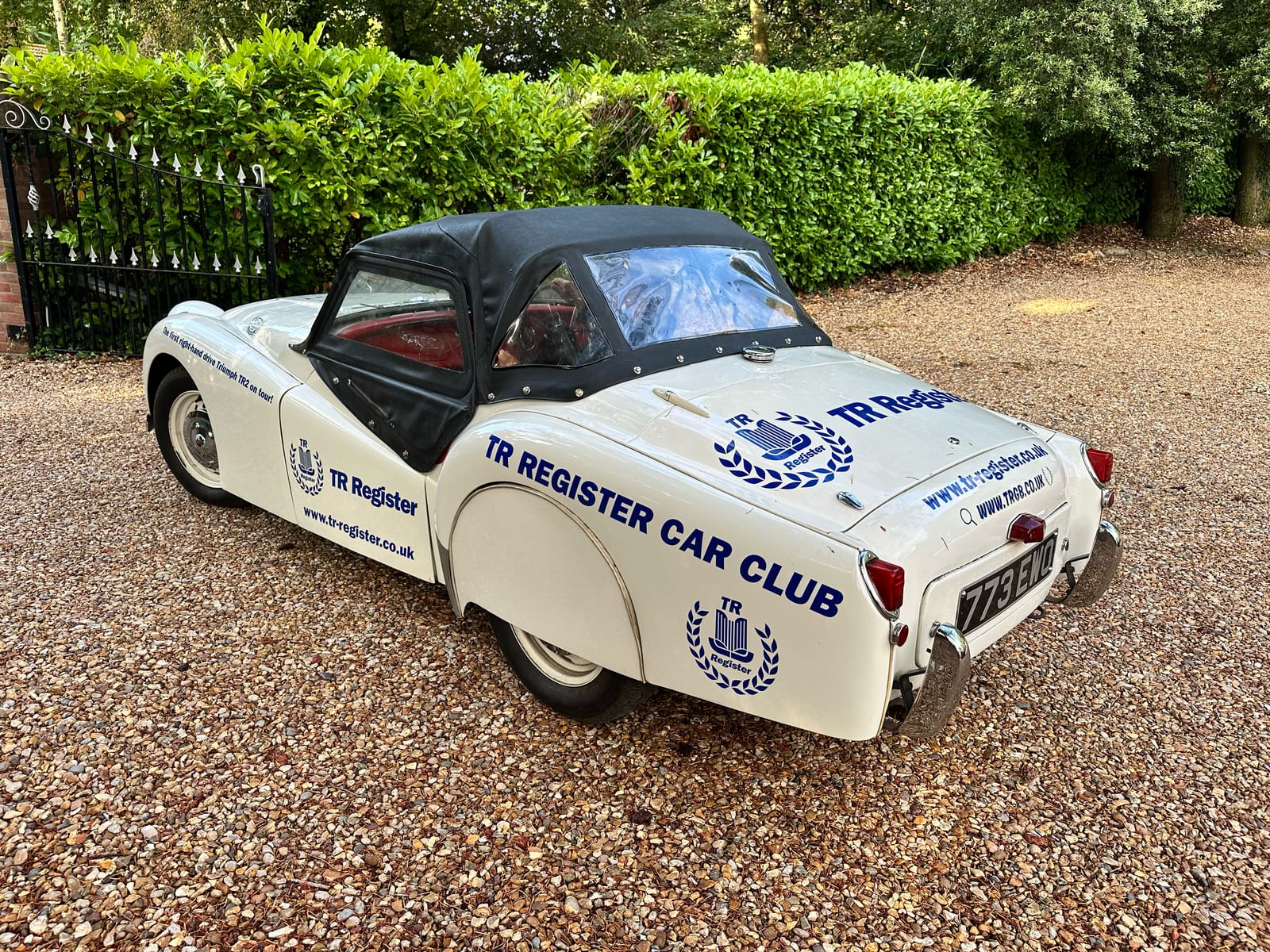
Roof on, and half blind
Off to Holt with the roof up. We have done almost no roof on miles, and the first thing that becomes apparent is just how much of the world is lost behind its shroud.
The rear screen looks semi-opaque in the mirror. The roof wraps down the sides well below my eye line. The sidescreens blocks the handy mirror mounted on the edge of the windscreen entirely. The result is that I cannot really see behind me, or out to either side. I’m clearly not 1953 scaled, but as she sits a little lower in the seat, Evie seems quite at home. Whilst leaning towards the claustrophobic, it’s remarkably plush in here.
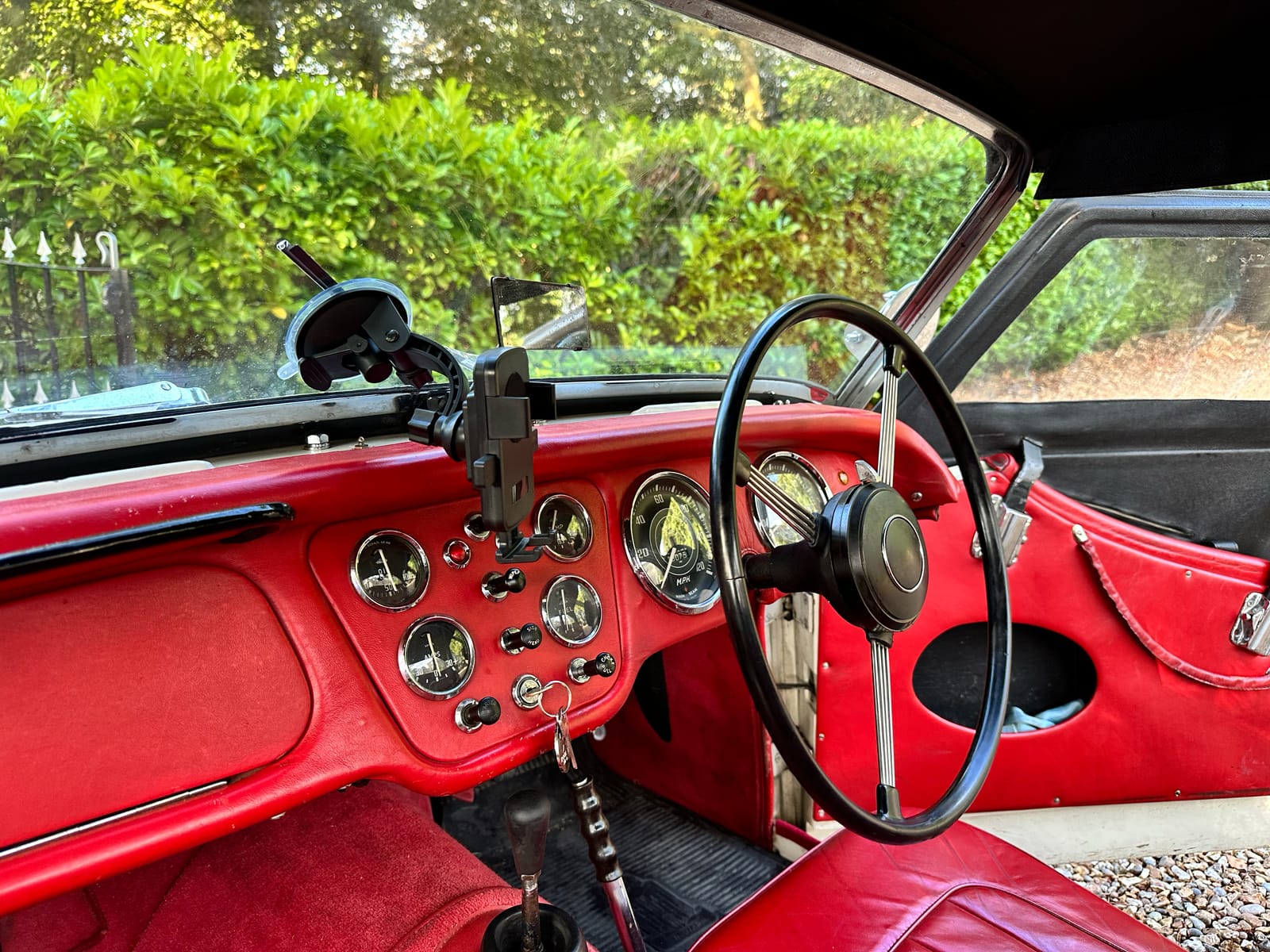
The engine seemed to bog down a little on the way out. With the roof on, everything sounds different. Without the wind in my hair, it is genuinely hard to tell whether the car is, or just feels slower. Park that thought. It comes back later.
Up in the air
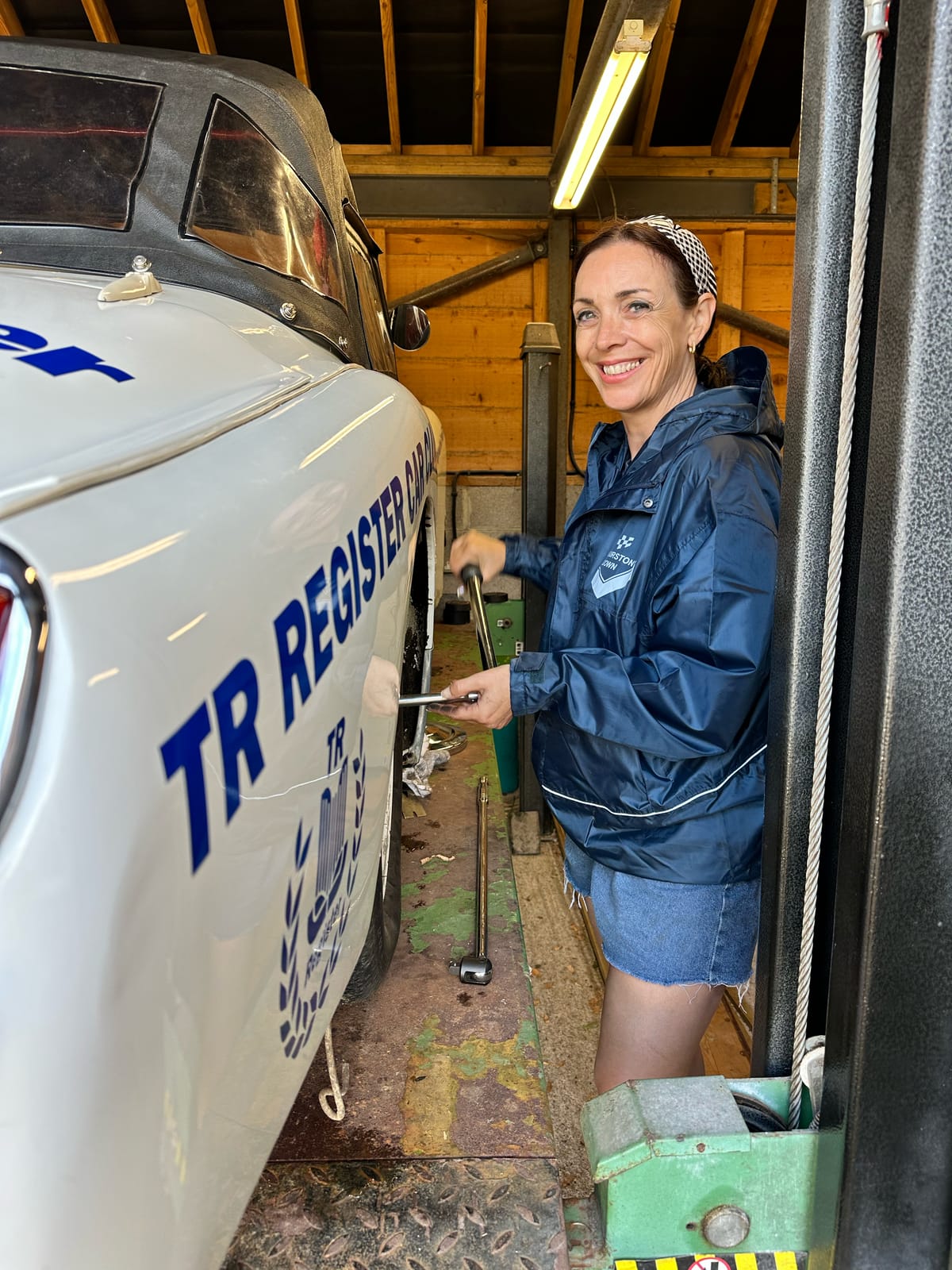
At Holt we took the spats off (a complex choreography of levers and latches better learned in the garage), checked tyre-pressures (all fine), and revisited each corner checking for bearing play, stripped threads and lug-nut torques. Nothing untoward.
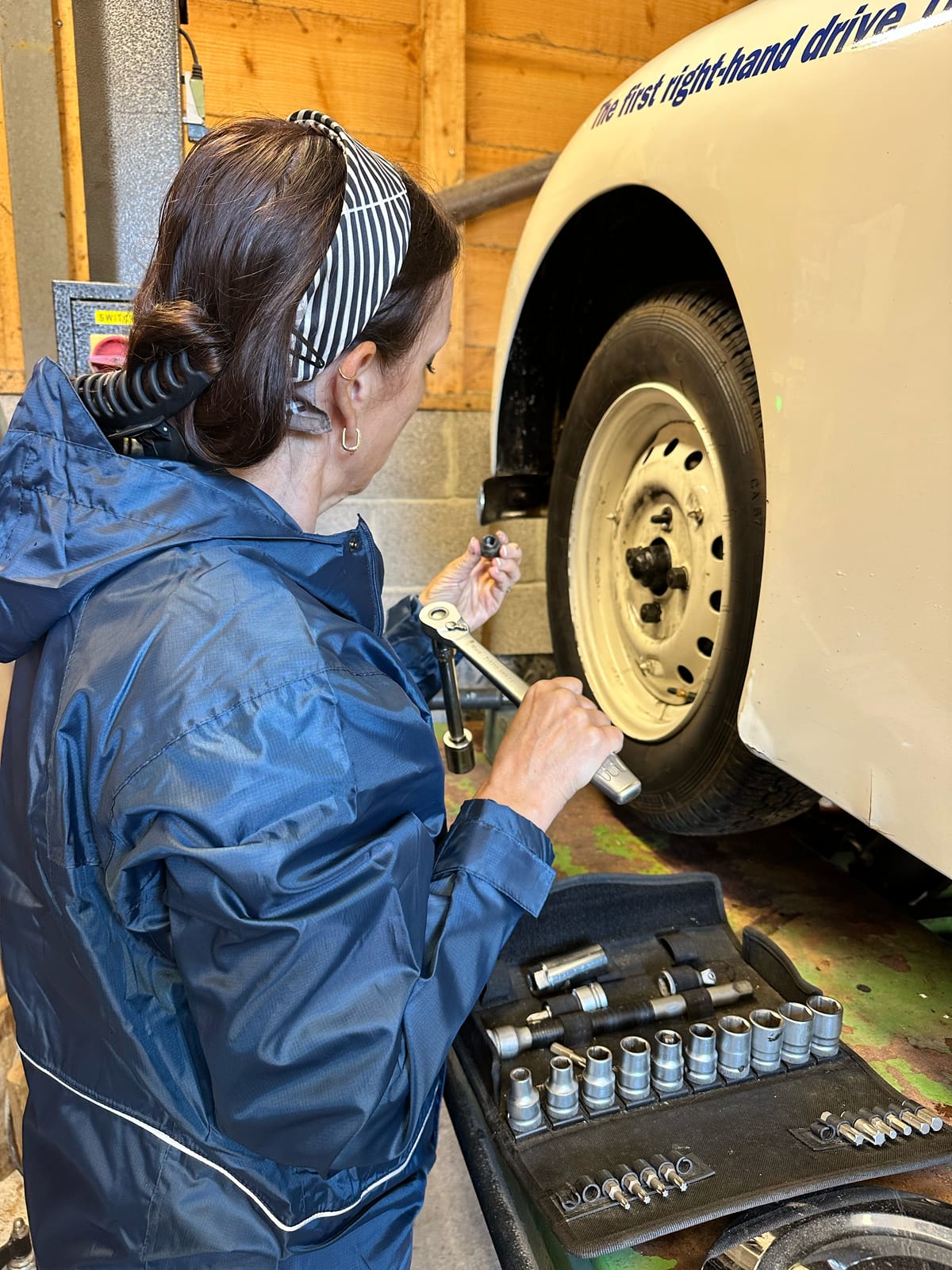
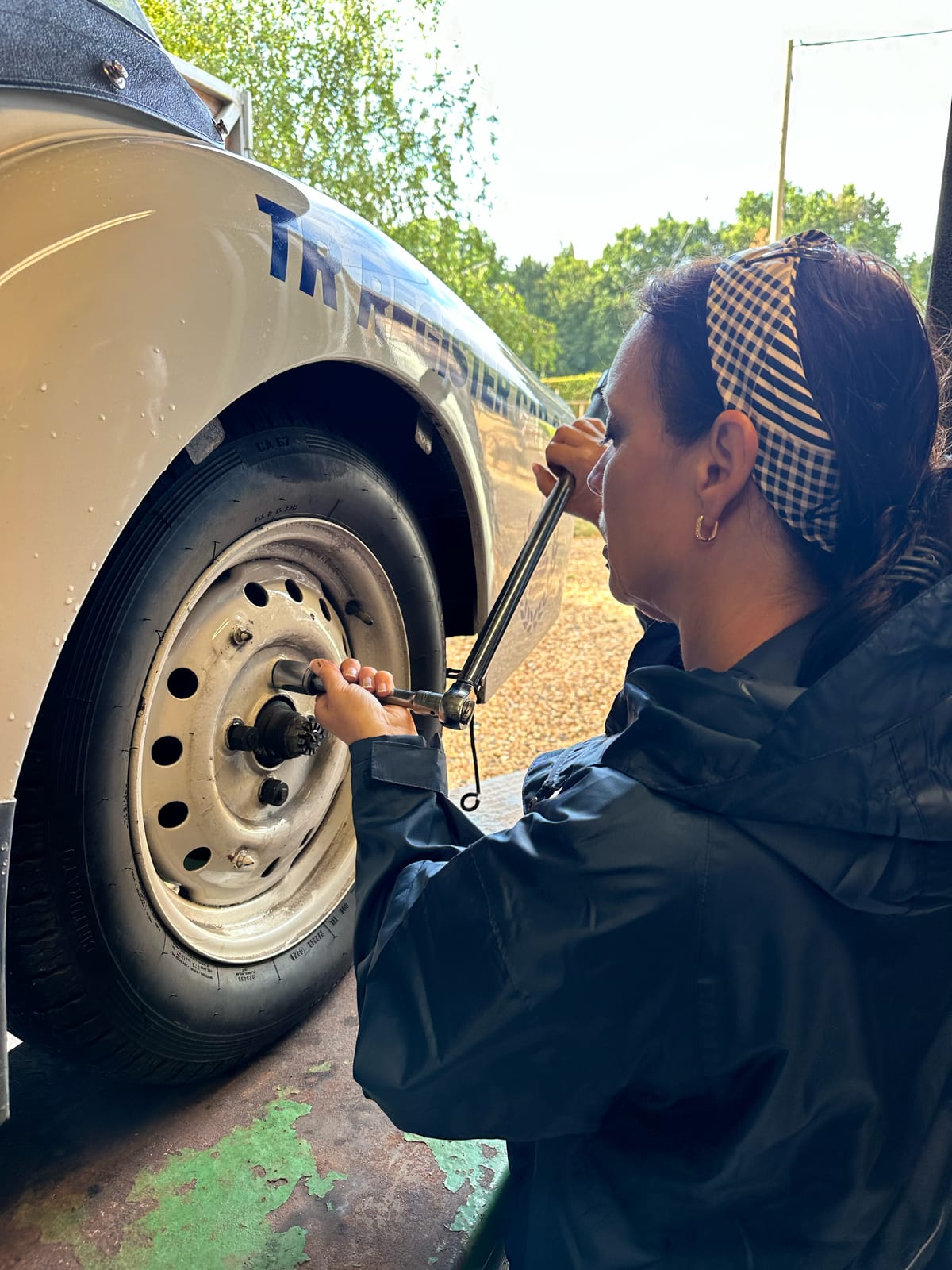
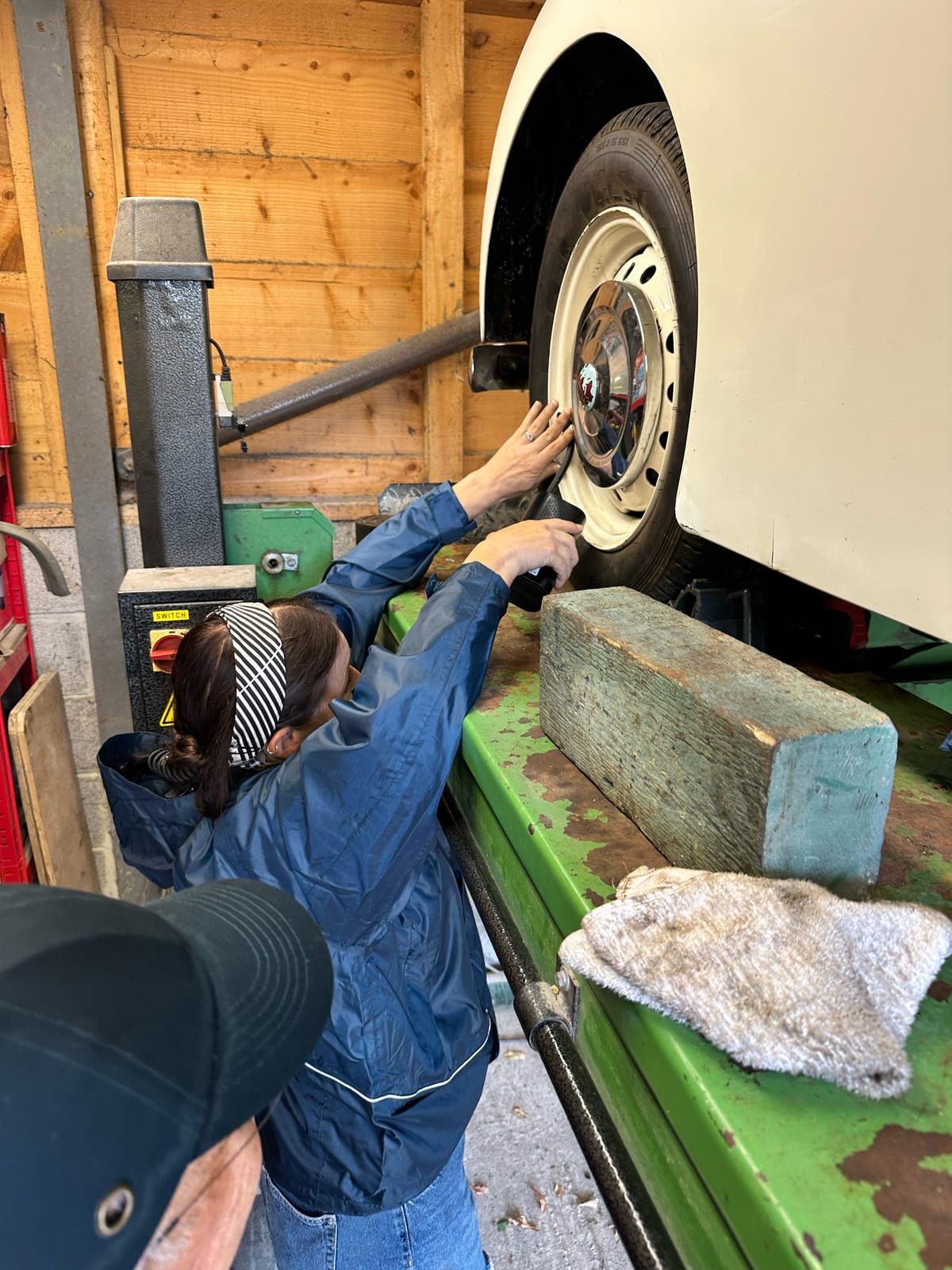
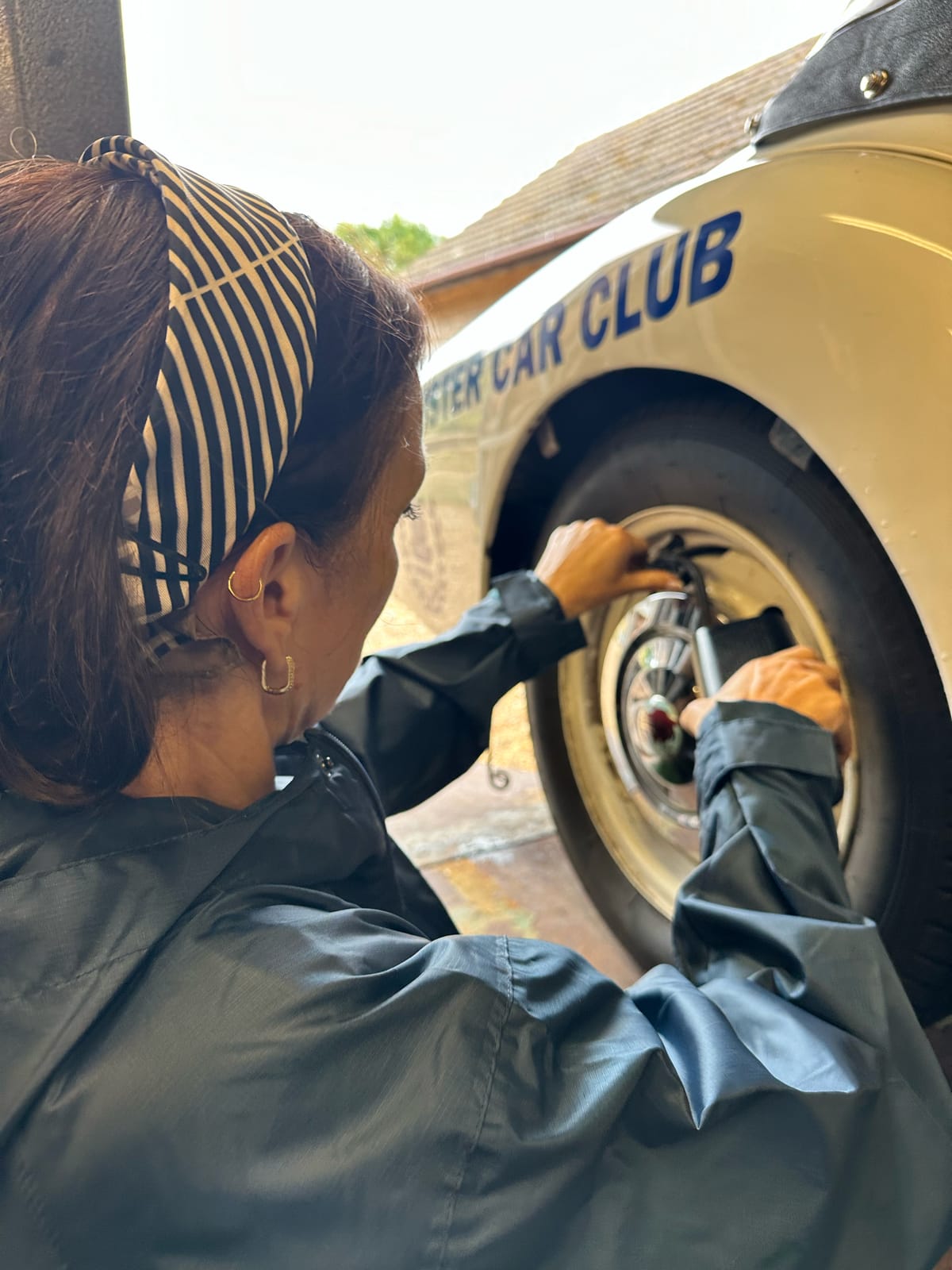
A little play in the nearside front castle nut, tightened by two flats to make good. The offside rear brake was binding slightly. We were surprised to find a modern adjuster back there, but it backed off easily and the noise went with it. Weak rear axles are a known issue on TR2s, and it’s a common enough upgrade for users to swap the Mayflower derived Lockheed rear axle assembly for the Girling setup Triumph themselves fitted to the 3A and later 4. This is a living car, after all, with its own storied past.
The flutter
Driving out to check the brakes were still pulling straight, the engine developed an intermittent flutter. Taken together with the flat feeling on the outbound leg, this stops being a question of perception and swings towards an issue with ignition.
So, in order. Leads, all firmly secured. Plugs, checked and re-torqued. Rotor arm, a little charred but serviceable. Points, gapped correctly. Quick conversation with The Register, and we swapped the condenser for a Distributor Doctor supplied unit. The spares box had a new distributor cap, so we added that for good measure. Starts on the button, and seems to rev freely. The idle came up a little (often a good sign of a happier engine) so we wound each carb down a quarter turn to keep her cool in traffic.
Engine happy, and spare rotor arm lives in the boot for now.
Tadpoles
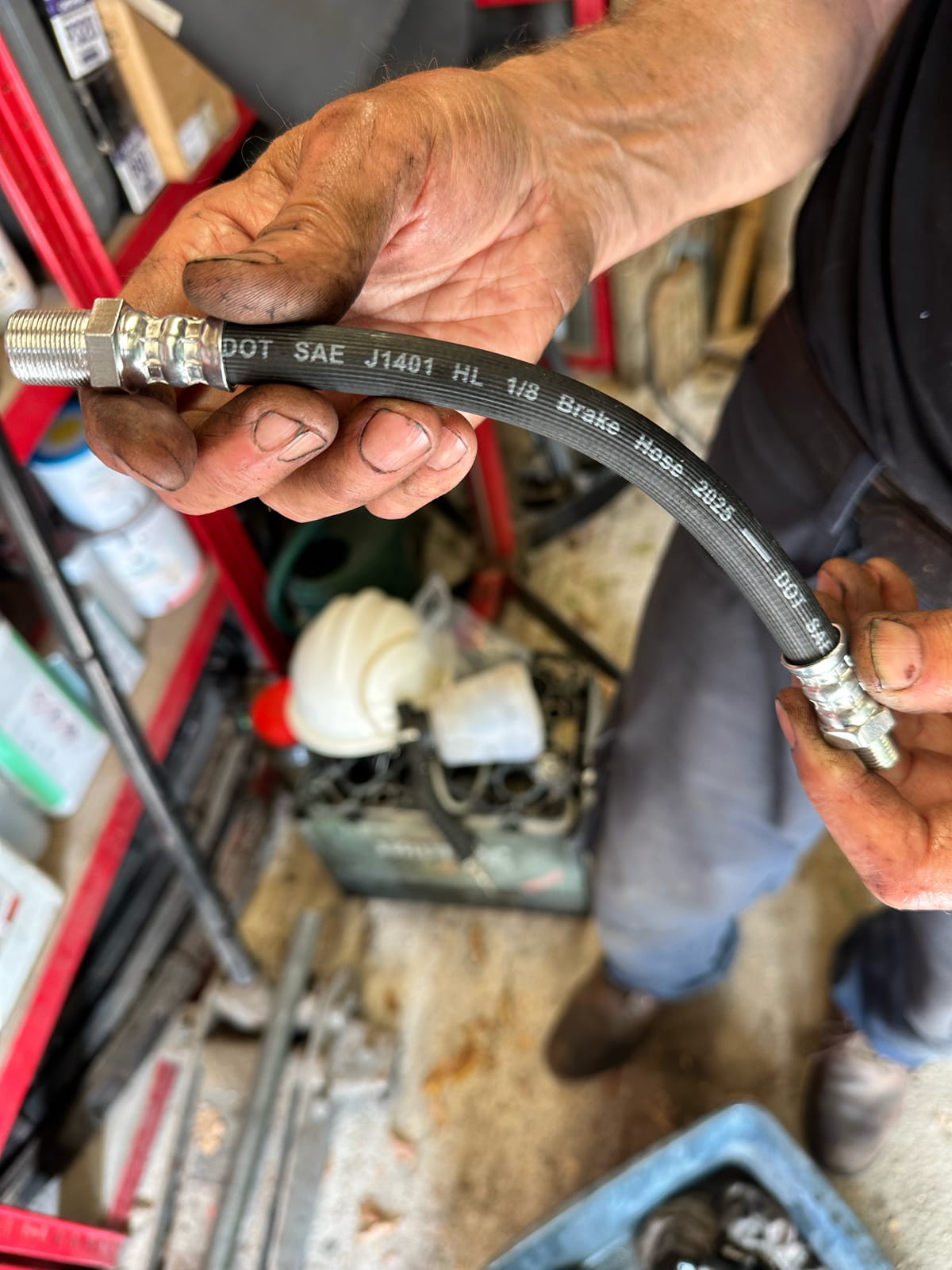
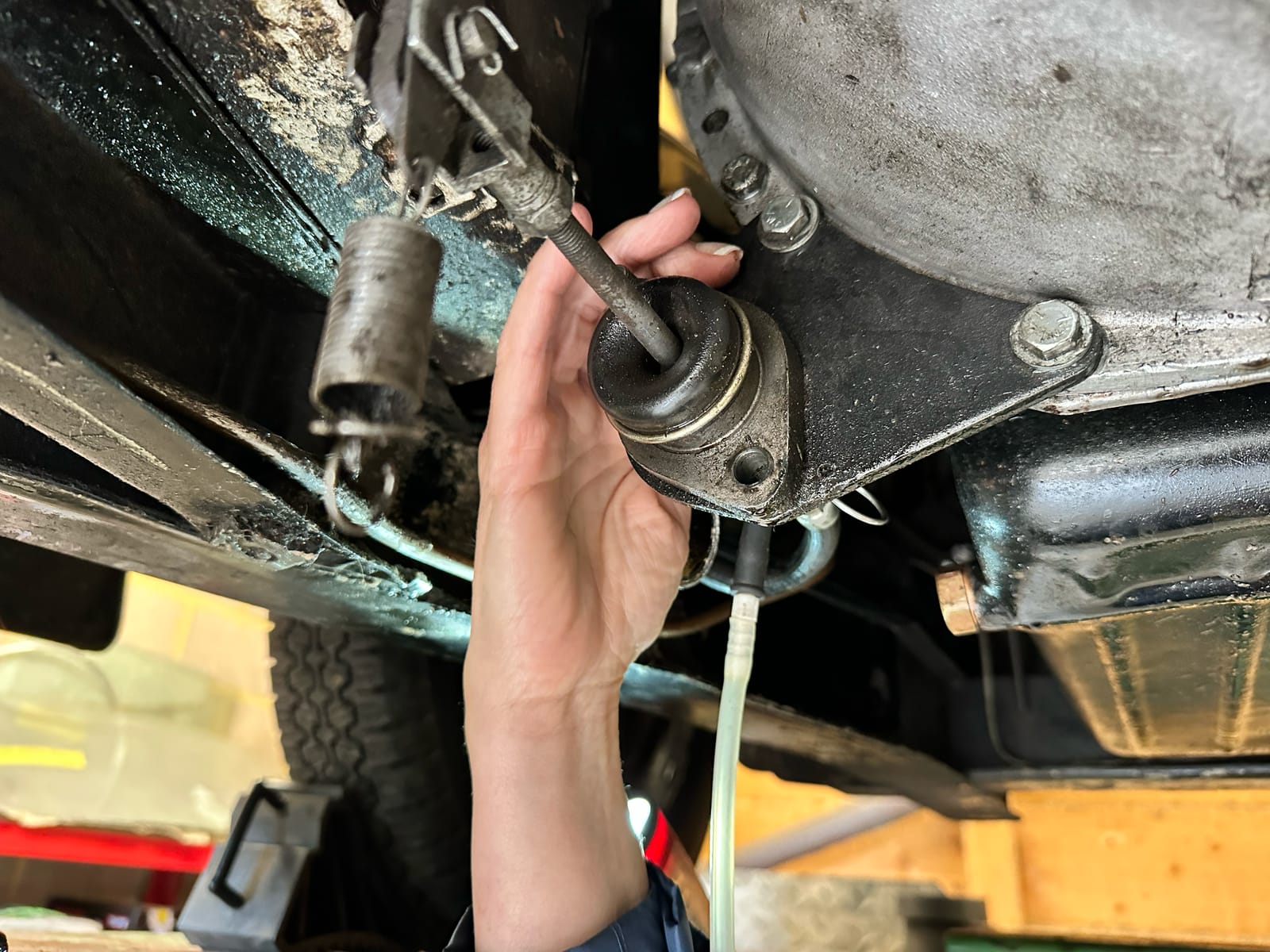
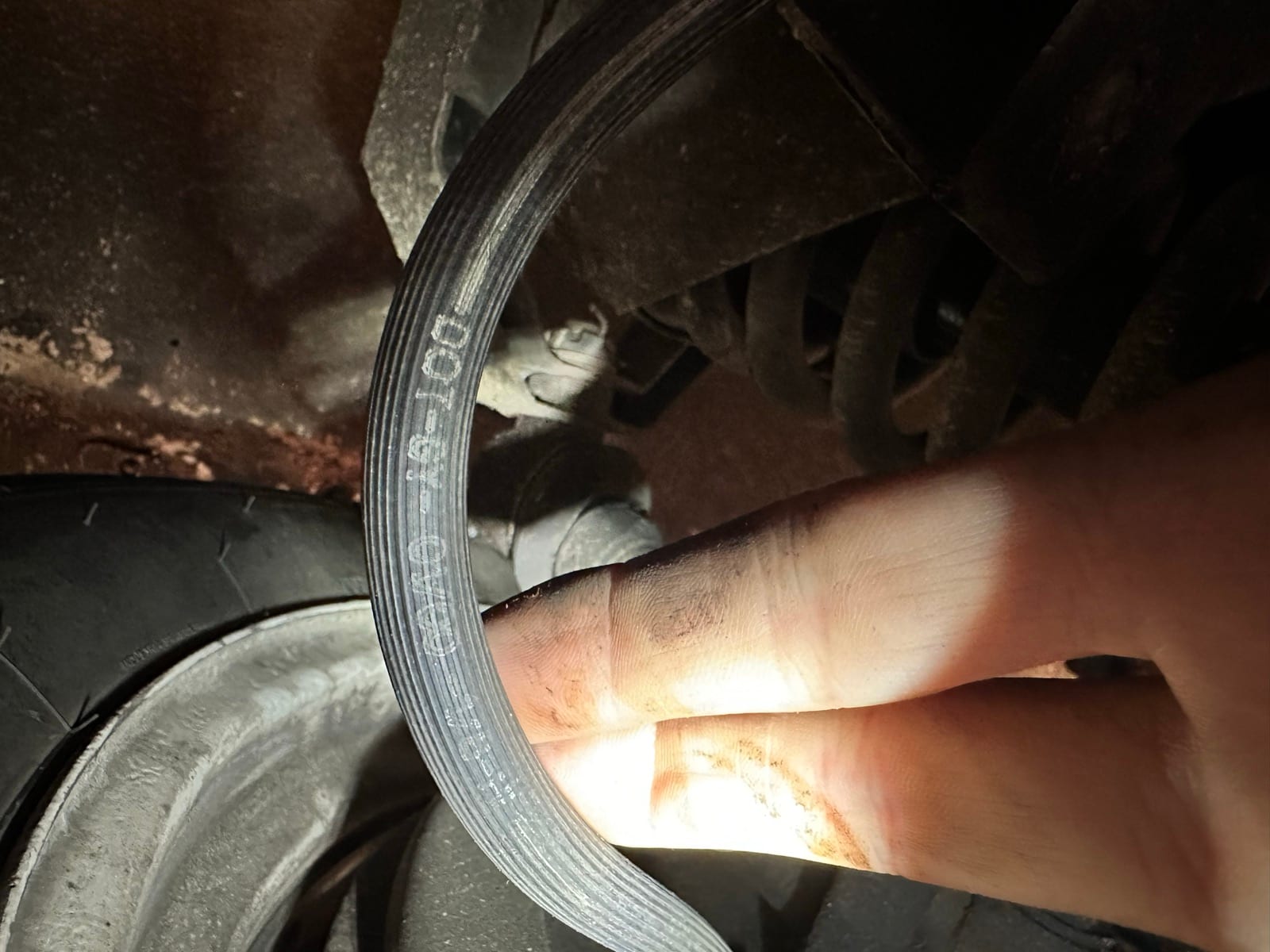
Evie had noticed the gear selector becoming quite notchy, so we checked to see if the clutch slave needed bleeding. The cylinder hose carried markings dating it to Q1, 2000. With a mountain stage ahead, changing the slave pre-emptively seemed the wise move. These things have a habit of giving up at the worst possible moment.
Our youngest still carries the mental scars of one particular school pickup where the clutch slave seal on Evie’s 4A became suddenly incontinent in the parent car park. A rev-matched crawl home with judicious use of overdrive through rush hour traffic was inconvenient in Poole. It’d be a game ender on the 10CR.
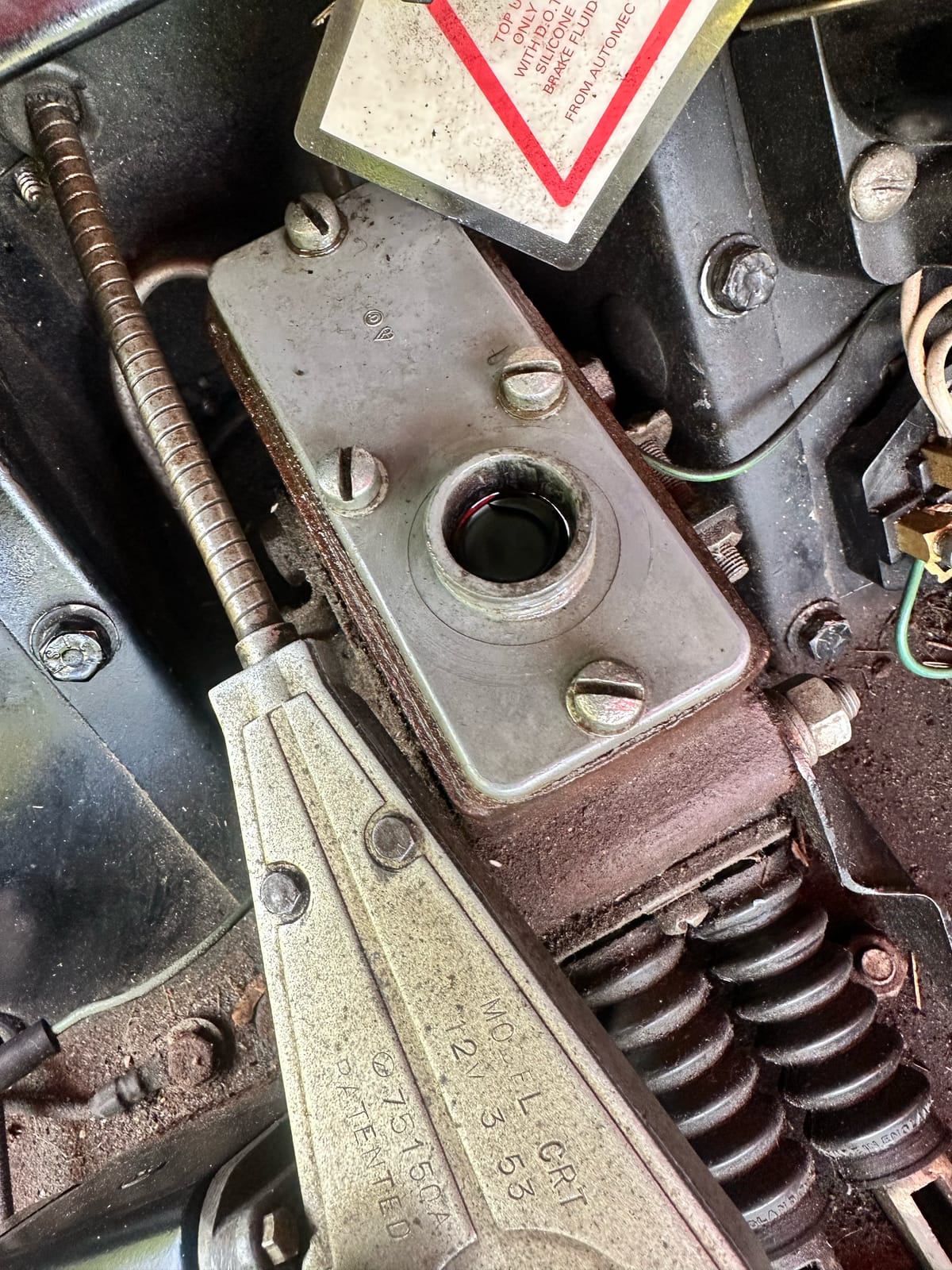
We had the correct Lockheed unit bagged up and ready to go on, so it made sense to fit it now and carry the old one as a spare. Upon removal, we had expected to lose a little hydraulic fluid. What we had not expected was tadpoles. Little round black blobs, floating in the hoses. They’re either the detritus of a dying seal somewhere in the system, or evidence of two different spec fluids that refuse to co-habit. Either way, this is going to be a problem. DOT4 and 5.1 are glycol based. TS2 is running silicone based DOT 5. Combine those and you get a seal destroying chemical reaction, pockets of water in your lines that turn to steam under prolonged braking, and sludge that clogs lines and pistons.
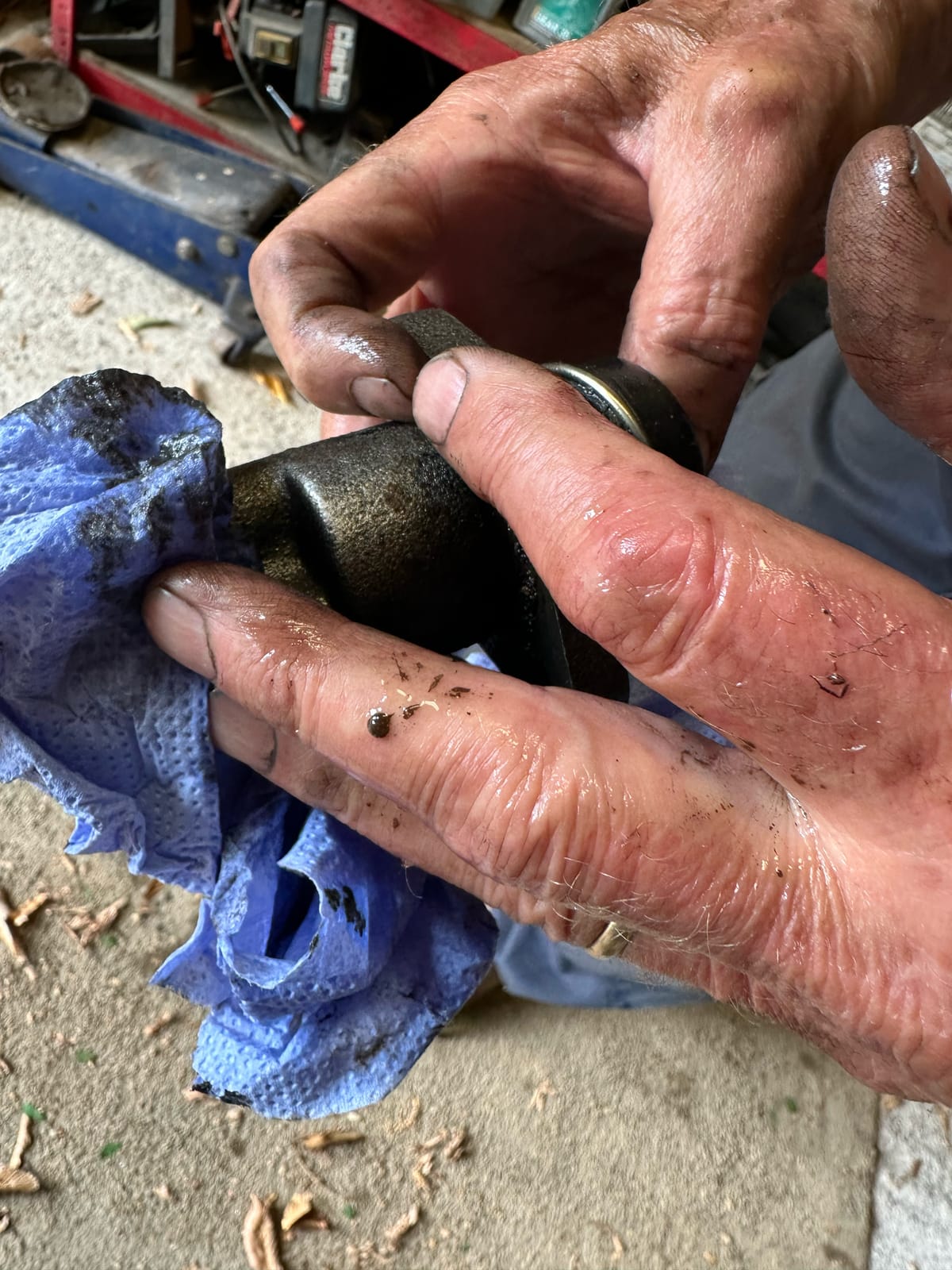
We fitted the new slave cylinder, which is emphatically not a job I would fancy at the side of the road, topped up with the supplied DOT 5, and drove her home.
Topping up a contaminated system is a get home measure and nothing more.
Brake and clutch share a reservoir on this car, so whatever is in one is in the other. If those tadpoles are dying seal rather than sulking fluid, it stops being a clutch inconvenience and becomes a braking one. That’s a DO NOT START scenario.
We need to source a new master cylinder, drain, flush, and refill to a single standard in the next six days, and it’s Bank Holiday Monday tomorrow.
Be Strong
Anyone who has maintained a classic knows these are exactly the surprises that turn a simple job into a bigger one, or turn a good day on the road into a bad one. Every issue found today was found on a lift, in a dry garage, on home turf with time to fix.
Days like this are a reminder that it is not only the car and its components that have to be strong. It is the people who have to extend their faith, to focus on the fix, to maintain a course in ill-winds, and to continue to push. She’s revealing a few faults. Fine.
Known job, known parts, six days to do it. I have a good set of friends in the Dorset TR Register and a wealth of knowledge to lean upon.
None of this is beyond us.